Wednesday, November 15, 2023

Youth Festival

Maharaja Krishnakumarsinhji Bhavnagar University organised a youth festival for 3 days 3rd, 4th and 5th November. On 2nd November there was a Kala-Yatra. In Kala-Yatra students from different colleges who have participated in Youth Festival they joined Kala-Yatra with a theme of Woman Empowerment. In which our department works on how education plays a vital role in women's life, and how patriarchy is controlling women from chasing their dreams. Kala-Yatra started at Samaldas college and it ended at Sardarnagar circle Bhavnagar. University has organised cold drinks and dinner for the students who have participated in the Kalayatra. 

At Department of English 


At Samaldas - Kalayatra starting point


Themes:

Major theme in Youth festival 2023 was women empowerment. On the first day of Kala-Yatra the major theme was the same. In skit major themes were represented like Chandrayan, issues like unemployment, road construction, Manipur events, our education system and many more contemporary issues in India.

In sugam geet competition most of the songs were related to the theme of marriage, worshipping, philosophical and struggle of daily life. In poetry recitation the major themes were love, betrayal, philosophy, hope, life lessons etc. In poster making there were themes like importance of water, women empowerment and education. In cartooning three topics were given: election, high prices and Gandhiji and the people. In ekanki we find topics like Kashmir crisis, Indian myths related events, and contemporary events.

On 3rd November in the morning our duty as a volunteer was at the main stage where the opening ceremony was organised. We have helped in giving water bottles and bouquets to the guests. All the events were organised in a good way. Then many guests have delivered their speeches and motivated the participants. As a chief guest Jayveersinh, Bhartiben Shiyal, and Vaghani sir were present on the stage.

Behind the stage at Amphitheatre 


An inauguration at Amphitheatre 

There were other events in which I have participated as a volunteer. My duty was at the department of English. There were three events organised at the department of English. Quiz competition, self written poetry recitation and Essay competition, Vimal pandya sir was there to evaluate the competition. 

Quiz competition at Dep. of English 

Our duties were to do registration of the students and helping them to find the room where the event was organised, providing water facilities and giving things which are required. We also learnt how the quiz event is organised and how marks are given. In the first round there were 23 teams of participants in the quiz competition and among them only five teams were selected as finalists. Second round of quiz competition was the next day, where they were given three grades among five teams. This year the university has decided to give college code so the evaluation can be more neutral.

Volunteers 

On 3rd November at Amphitheatre two competitions are organised: Mimicry and folk dance. In mimicry participants have 5 minutes in which they have to present themselves. In mimicry you can imitate any actors or birds or animal sounds. Many participants have told stories in which they told a story by making different types of sounds of different people. Second event was folk dance, in which 23 colleges participated. They have presented Gujarati folk dance, they have also brought their singers and instruments as per rules. By seeing that I got goosebumps because they all have presented so well.

Mimicry 

At Atal auditorium that day Skit and drama solo performance were organised. In mono different types of characters were portrayed like Nathuram Godse, Draupadi, eunuke, rural wife, man complaining about the problem of street animals. They have performed very well. Their costumes are different, related to the dance and the audience also cheered them on. If we compare these drama performances with any literary theories of drama, it can be related with comedy of manners. We can find lite satire on political systems and contemporary events. Some of the performances targeted particular political parties directly, some of which were related to the ideology. We can also find glimpses of sentimental comedy as well in some of the performances especially in the solo performances.

Folk Dance 

On 4th November there are events like Western solo singing, group singing western and folk, Duha-Chhanda, traditional dance, elocution, on the spot photography, clay modelling, mehndi, cartooning, poster making, Rangoli, quiz and essay competition. In elocution competition the topic was given 'AI: curse or boon'. Many participants spoke very well. Their choice of words, body language, and hand gestures are really good. 

Installation 

On 5th November there were group songs(Indian), mime and installation competition were organised. In installation many models are made. It is a concept of making best out of waste so participants have to bring some waste material and make something good out of that. Mime and group songs also performed nicely. At the end there was an ending ceremony in which medals and certificates were given to the winners. On the last day we cheered for the winners. On 8th November university organised a thanksgiving feast for the volunteers and after that all the volunteers and organisers professors, staff mambers get together and discussed how the things were managed by volunteers and team leaders.

Thanksgiving ceremony 

Overall it was a great opportunity to observe and learn new things. Especially as a volunteer, I have learnt a lot many things. It was the first time that I was a part of such a big event. I have enjoyed it a lot.


Words: 917

Images: 11

Wednesday, November 8, 2023

The Importance of Being Earnest

This blog is a response to a task assigned by Megha ma'am Department of English (MKBU). In this blog few questions are discussed related to the play 'Importance of Being Earnest'

'The Importance of Being Earnest’ is a play written by Oscar Wilde. It is a trivial comedy which revolves around the name ‘Ernest’. The play was performed in 1895 and published in 1899. The play was a huge success during contemporary time.


1) Wilde originally subtitled The Importance of Being Earnest “A Serious Comedy for Trivial People” but changed that to “A Trivial Comedy for Serious People.” What is the difference between the two subtitles?

Ans. 

The first suite suggests that the play is a serious comedy so it overlooks that the play is not only a comedy but seriousness is also there. But as we know that the play has nothing that we can consider as a serious matter. The play is rather a comedy or a satire of the 18th century and in a very comic way. 

In the second title we can find it a trivial comedy, in which Wilde tries to say that it is a trivial comedy which has a very little importance and this play is for the serious people who are very serious in their life so they can live their life in little comic way and they can enjoy life in a large way.

As the main title suggests, the importance of the name and the quality of being earnest. But in the play it is vice versa we don't find any seriousness in the character.


2) Which of the female characters is the most attractive to you among Lady Augusta Bracknell, Gwendolen Fairfax, Cecily Cardew, and Miss Prism? Give your reasons for her being the most attractive among all.

Ans.

According to me, Gwendolen is the most attractive character in the play. Because she has fascinating dialogues and a good role in moving the plot of the play ahead. In loving Jack as the 'Earnest' her character shows innocence. Loving the name Ernest more than a person shows how she is fascinated with that name. But in the name we find when she get to know about whatever Jack has done it is only because he wants to get her love back and at the end she forgives him and agrees to marry him.

If we compare the character with other lady characters we see that she is more mature and responsible. When her aunt refuses to marry Jack, she still loves him going against her aunt so we can see she is brave, she has the guts to go against her family.She does not care about Jake(Ernest) family background or property she just loves him and the name Ernest.

3) The play repeatedly mocks Victorian traditions and social customs, marriage, and the pursuit of love in particular. Through which situations and characters is this happening in the play?

Ans.

First of all we can see the theme of marriage, how marriage is considered as a vital part in Victorian society. And for marriage, suitable partners are also needed. There are several criteria for that, for example when Lady Bracknell conducts an interview for finding a partner for Gwendolen she asks for family background and property and if a person does not fit that role he would get rejected.

Some of the social customs we also find for example compulsory be present in the social gatherings and behave in a way that everyone is comfortable. And as the title suggests that the people used to give too much importance to the name 'Ernest' instead of being earnest so we can see the contrast in the showing and being. We can find the hypocrisy of Victorian people in the play.

In love we find trivial things are too important. Comic romance we find between the characters. And loving the name instead of person shows what type of mentality Victorian would have during contemporary time.

4) Queer scholars have argued that the play's themes of duplicity and ambivalence are inextricably bound up with Wilde's homosexuality and that the play exhibits a "flickering presence-absence of… homosexual desire" Do you agree with this observation? Give your arguments to justify your stance.

Ans.

According to me, we can't state that the play's duplicity and ambivalence are connected with Wilde's homosexuality. But on the other hand we find in the novel that when Jack becomes Ernest in London he can live his life freely. So he makes him something else to enjoy his life. In real life there is a possibility that Wilde might have lived the life as someone else may be homosexual but we can't be obvious that it shows us that.

In Wilde's contemporary time there was less awareness regarding LGBTQ it's obvious that society would never have accepted that. That's why we can see in Wilde's life he has to suffer a lot because of his homosexuality, even he has to leave London also because of that. So I think Oscar might have tried to keep his homosexuality hidden but it was revealed at a certain period of time. And during that time Oscar might have lived that dual life.

5) Watch any movie related to the play and write a critical review of it.

Ans. 

I have seen a movie adaptations of the play 'Importance of Being Earnest' directed by Anthony Asquith, released in 1952.

The movie is almost based on the original play, the slightest change we can find in plot and scene but it is minor. If we talk about the costume, it reflects the Victorian era. Actors' facial expressions are to the point, in body language we can also observe that egoistic nature of the Victorian upper class people. We can also observe their lifestyle in the movie.

The movie is overall good. I would give 7 out of 10 ratings to the movie. But still it was written in the Victorian era and movie adaptations was made in the mid 20th so in 21st century it is hard to like it but still it's not that bad.

Words: 1022

Images: 2

Videos: 1

Tuesday, October 24, 2023

The Rover

This blog is a response to a task assigned by Megha ma'am Department of English (MKBU). This blog is about the play 'The Rover' written by Aphra Behn and played in 1677.

Aphra Behn

'The Rover' is a play written by Aphra Behn in the Restoration period. The play became so famous during the Restoration period. Aphra Behn is a woman writer who gave inspiration to the other women writers to give contribution to the literature. Virginia Woolf also admires her for her brave act of writing during that period of time when so little importance was given to women writers.

1) Angellica considers the financial negotiations that one makes before marrying a prospective bride the same as prostitution. Do you agree?

Ans.

In Angelica's character we find that she negotiates the price before doing the business. In the same way in society we also find that the people negotiate in the same way in the marriage institute. I agree with that.

Prostitution is business and through that business person gets bread and butter by doing the business so we accept that person negotiates. But in marriage is this really necessary? In newspapers there are so many advertisements of marriage that this type of person is needed for marriage. While two families meet to discuss the marriage there are also so many types of negotiations. That dowry is needed if you want to marry.

Even in well educated families they also ask for dowry in India. It has become a tradition that dowry should be given to the other family. Is there any difference between prostitution or marriage? In some families a woman has to hear so much taunting if she does not bring dowry in the marriage. 

The question arises that can people be aware about this topic and give up this evil act? 

2) "All women together ought to let flowers fall upon the tomb of Aphra Behn, for it was she who earned them the right to speak their minds." Virginia Woolf said so in 'A Room of One's Own'. Do you agree with his statement? Justify your answer with reference to our reading of the play 'The Rover'.

Ans. 

I agree with the sentence. Virginia Woolf who played a vital role in reforming women's rights. And this voice also gets inspiration from Aphra Behn and says that All women should respect her she says it rightly.

In the Restoration period people were not even reading women's writings, then she wrote such work that gives inspiration to today's women so it is really ahead of time. As we know Aphra didn't get much reputation during her own period of time and she died poor but she has given something to look up to for women which is considerably a brave thing to do.

In 'The Rover' there are so many characters like Hellena and Florinda who go against the traditional norms and they marry their partners, even going against their family. Florinda marries Bellville whom she loves and Hellena who has decided to be nun but she changes her mind and engages with Willmore. Even in the role of Angelica, even she is prostitute still she fights with her lover to get love, in play reader would develop sympathy for Angelica's character because even she gives up so many things for her love.

So even in the Restoration period we find a woman writer who challenges the traditional role of women and gives their character freedom to act in such a way.

3) Which female character best represents the playwright, Aphra Behn? Consider the characteristics and beliefs of each female character, and make an argument that relates these distinctive attributes to what you know about Behn.

Ans. 

In the play 'The Rover' there is a character named Hellena who suits the originality of Aphra Behn. As we know Aphra Behn has done spying for Charles II, she knows how to disguise herself, same thing we find in Hellena. Hellena has a witty language she uses when she disguises herself in different roles. Once even she disguised herself as a boy. She likes Willmore and marries him although she first wanted to become a nun. We find individuality and independence in her character.

We also find the character of Florinda who challenges the social norms and marries with her lover not with a partner chosen by the family. She is an honest, wealthy girl who struggles with her brother and lover. Florinda behaves wisely when she finds that Bellville, his lover, is with his friends at prostitution's place; she checks Bellville's loyalty by giving him jewellery.

Angelica is a prostitution, she falls in love with Willmore but Willmore wants to be with Hellena so she fights to get her love back but she can't. Although she is a prostitute, she has a love relationship with Willmore. It suggests that she puts her lover over money. It gives a good quality to her character.

Valeria's character is also considerable in the play. Aphra Behn portrays her as a modern woman who chooses her path by herself and pursues independent life. She likes Frederick and marries her. She helps her cousins in disguising as gypsy girls.

Aphra Behn's women characters are modern and rebellious towards traditional norms and bounds and live a free life. But Hellena is the character that we can relate more with Aphra Behn herself.

Saturday, October 21, 2023

A Tale of a Tub

This blog is a response to a task assigned by Vaidehi Ma'am(Department of English, MKBU). The blog is about a satire: A tale of a Tub written by Jonathan Swift. For more detail about this blog click here.


A Tale of a Tub is a satire on religion, written by Jonathan Swift. It was written to give favor to the Anglican Church but It was interpreted differently by readers. It was published in 1704. It gives metaphorical reference to God, bible and three different parts of Christianity.


The title of the satire suggest that while people on the ship want to distract whale from attacking the ship they throw a tub far from the ship so whale gets distracted and does not attack on the ship. This satire throws a tub or digression which can save society from following wrong system of religion.

Q: 1) How far do you think Digression is necessary?


Ans.

If we consider digression in the reference to a Tale of a Tub then digression becomes really difficult to understand. When a person who does not know the context then he/she would be lost in digression. And this satire has come out differently than Swift wanted, it was interpreted differently. 


In day to day life if we see then digression has its own importance. Because human beings have limited capacity to work and the same work they can't do for a very long time. They get bored, they get tired, so they need some escape. Then digression enters which provides space to recover from monotonous life and spend some time with other activities. That is why holidays and different festivals are there to make people do something different. Then digression becomes a blessing for human beings and they can enjoy life by doing something different. 


Sometimes we also consider digression as a bad habit because when we try to focus on some important work and digression enters then it would be really difficult to concentrate on work so It also has its disadvantages.


Q: 2)Identify any one movie/web series/song/poem/novel which talks about a sensitive topic like religion. Write in brief about it and explain what kind questions are raised through that work.


Ans. 

In Jonathan Swift’s satire we find he talks about Christianity and different parts of the religion, he metaphorically tried to say the bible should not be changed or altered. 


Same thing we find in the Bollywood movie ‘OMG- Oh My God’. There we find the same concept: with the name of religion people are just trying to exploit people in every possible way. The movie tries to find the real meaning of religion, God and what people should see in society.


As we know that a religion is a sensible topic when one hears about religion he\she would take it personally or his\her own religious beliefs. Same thing happened with the movie. Many religious institutions boycotted the movie, saying that the movie is opposing the idea of their religion. Many accepted the movie as well, when they saw it was not about religion but it was about the people who are doing business in the name of religion.


In the movie main character Kanji Mehta, in the name we find the hint of religion but he is atheist, we see that he is rebellious toward wrong beliefs of religion. Then the earthquake comes and he loses his shop. Then the insurance company says that it is an act of god so he would not get any returns from the insurance company then he tries to take legal action against the god. And he points out the wrong system of religion. 


In the movie we see Kanji Mehta is a really strong character. He struggles a lot and loses his property and family. Still he does not lose his hope and fights against society that can not see the truth. Now the whole world is against him because everyone has a faith in god and he says if god exists then come into the court and return the money that is lost because of his act.


Kanji also argues that he has given lots of money to temples, he shows different receipts of given money. Now if god is not there to give money then these religious people have to give my money back because they say that god exists and they have direct contact with god. 


The movie satirises many religious beliefs of contemporary time. It also gives a space to think twice before following any path. It questions superstitions and the so-called religious system.

Friday, October 20, 2023

Jude The Obscure

This blog is a response to a task assigned by Dilip Barad sir, Department of English (MKBU). This blog is about the novel of Thomas Hardy named Jude the Obscure. For more information click here.


1) What is the significance of the epigraph written by Hardy - 'Letter Killeth' - for this novel, Jude the Obscure?


Ans. 


As we know the novel is about religion, marriage and sexuality. It is said that “Letter killeth spirit gives life”. This phrase tries to put a light upon the religious text that we read and takes the wrong meaning out of that text. When one tries to understand the text literally, means taking the literal meaning of the text that things kill but while one tries to to get the soul means that the essence of that religious text then one can find real meaning and that text gives life that spreads peace.


In contemporary time we also find people try to live life according to whatever has been told in the religious text. When one follows it literally it altogether has a different meaning. One should always know the context and the background. We can say ‘listen between the lines’ that should be done while following any text. For example The religious text Bhagavad Gita, has so many interpretations that have been written on one text so everyone has found something good in the text by their understanding but If one would take it literally then the real value of the text will be lost.


2) Is it possible to connect the meaning of the epigraph of 'Esdras' at the beginning of the first chapter of the novel and the myth of Bhasmasur?


Ans.


Hardy has put this epigraph at the beginning of the first chapter:

"Yea, many there be that have run out of their wits for women, and become servants for their sake. Many have perished, have erred, and sinned for women…O ye men, how can it be but women should be strong, seeing they do thus?" – Esdras


These lines suggest how women can play a destructive role in men's lives. As mentioned in the above lines by Esdrad that Because of the women many men have lost their wits and became servants of women's will. Many have perished, made errors and sins for women. 


The same story we find in Hindu mythology of Bhasmasur. Bhasmasur was an Asur, who did the Tapa and Lord Shiva gave a boon that when he puts his hand on someone else's head that person would perish and nobody can kill him. Now as we know hindu mythology what a person does after getting these types of boons, He does the same he starts killing Devas Once even he tries to kill Lord Shiva.


Now, matter comes to Lord Vishnu, He disguises himself into a beautiful girl named Mohini. When Bhasmasur sees him he is charmed by the beauty of Mohini, he proposes to her to marry. Mohini says if you can dance with me and follow every dance step I do then she will marry him, he agrees. Mohini started making different postures of dance Bhasmasur followed. Bhasmasur became blind after seeing the beauty of Mohini; he forgot about the boon. Mohini did the posture of putting her hand on her head , Bhasmasur followed and perished immediately.


Here we find the same concept: how women can make men blind and make men do whatever women want. Men become the servant ,forgetting their true identity. In Bhasmasur’s myth we find that due to a woman he even loses his life.  


3)Structure of the Novel 'Jude the Obscure'.


Ans. As we know that novel was written in different parts. The novel was periodically published in the ‘Harper's New Monthly Magazine,’ and after completion of the novel, it was published as a book form in 1895. So some of the parts of the novel we find are distorted. Some of the critics also said that Hardy was not clear what he wanted to convey through this novel.


In the novel, the belief system of Jude and Sue also changes. In the beginning of the novel Jude reads books related to the religion, he is sympathetic towards birds and earthworms in contrast, in the beginning Sue is secular, rationalist. But in the end we find there is the reverse of the belief system. Sue becomes religious, she regrets leaving Philotson and living with Jude for this sin; she again goes to live with Philotson for peanance. And Jude becomes indifferent to all these religious beliefs. 


Their ideology is considered as evil modern spirit. It was a Victorian time, people used to believe that the Victorian era was already at its peak now new things will ruin it. So this modern concept of courtship and living together without marriage are still considered evil and sinful.


Hardy has tried to think beyond his contemporary time but still he was bound by time. He gives freedom to his characters to live their life freely but in the end they are bound to suffer because of their so called sinful acts. Still we can see that sin and bad results concept is in the author's mind, he can't be free from it.


In the preface Hardy also pointed out that the novel is a tragedy of unfulfilled aims. The fall of the Jude and Sue is bound to happen. They are never destined to be together so whatever they do living together is not in their destiny.


Sunday, October 15, 2023

Pride and Prejudice (Th)

This blog is a response to a task assigned by Megha ma'am Department of English (MKBU). This blog is about the novel of Jane Austen 'Pride and Prejudice'.


Pride and Prejudice is an epistolary novel written by Jane Austen, published in 1813. The novel is also known as 'Virtue Rewarded'. The novel tells a story about a fifteen years old girl who is a servant at Mrs.B's house. When Mrs.B dies his son Mr.B becomes her new master and he tries to take advantage of her. This novel is written in a form of 13 letters and 2 journals which tell us about what Pamela thinks and feels about her surroundings.


Q:1 Compare the narrative strategy of the novel and movie.


In both movie and in novel we find different types of narrative strategies. In a novel a third person describes different types of things that are happening in the novel scenes, dialogues, background. In movies we just have to look at the movie as if we are in the third person view. 


In novel narrator gives us a detailed description of scenes, characters and circumstances and in movie that is in short we have to comprehend whole picture because movie has shorter period of time. In novel we see so many scenes and the background is in length that has to be short and the director has to choose what parts he/she will include in the movie.


Novels allow us to have different imaginary scenarios in our mind and in movies it is represented visually so we don't have the scope to imagine things. In novel we understand characters in depth. We find the background of what they think, how they behave in detail. In Elizabeth's character we see how she is and how she sees the world and how she develops prejudice against Mr.Darcy. In a similar way in the novel we also read so many details that help us to understand his Pride but later we see it as an introvert character. In movie It is quite difficult to have a deeper look at the characters.


In the novel there is descriptive discussion about even minor characters and subplots. Whereas in movie the main spotlight is only on major characters because all those things can't fit in a 2 or 3 hour long movie. In conclusion we can say that it is always better to read the original text than watching a movie but if one does not like to read or doesn't have that time then a movie can be useful.


Q:2 Write an illustration of the society of Jane Austen's time.


Ans.


In her novel Pride and Prejudice we find very clearly what would have been scenarios in the society in her contemporary time. There must have been a class system, and more money means higher social status. And we also find differences in gender roles. For women It is a necessity to find a wealthy partner and settle down with him. As Austen mentioned in the very first line of the novel "It is a truth universally acknowledged that a single man in possession of a good fortune, must be in want of a wife". That shows that even men were also in search of a good partner. In that time so.much importance was given to marriage.


Even in relationships , money plays a vital role. In society , when one falls in love with someone else, one falls after seeing the other's wealth. Parents also choose partners for their children. In upper class people used to spend their time at parties and they seemed busy in finding a partner and dancing. So much importance was also given to the reputation of the family. People were too afraid of losing their reputation in society.


Q:3 What if Mr. Darcy and Elizabeth never got together? What if Lydia's elopement had a different outcome? Explore the consequences of these changes and write alternative endings to the novel.


Ans. 

In the middle of the novel It seems for some time that now it is difficult that Elizabeth and Mr.Darcy can be together. If that continues then we can consider different endings of the novel.


The letter that Mr.Darcy gives to Elizabeth to explain the misunderstanding between the them plays a vital role in moulding the flow of novel. If Mr.Darcy has too much pride as Elizabeth assumed then he will never try to convince her and he will never put love over his pride then that misunderstanding will continue and the novel will never settle as it did. So now Mr. Darcy does not have any feelings for Elizabeth and Elizabeth never really liked Mr.Darcy.


When Lydia elopes with Wickham Mr.Darcy would never try to settle that matter because now he has no feeling towards Elizabeth. And the reputation of Bennet family is ruined forever and because of that Mr. Bingley would not marry Jane Bennet. Because of the ruined reputation, the other Bennet sisters' marriage would face difficulties.


At the end Elizabeth has to access marriage proposal of Mr. Collins due to family pressure. Jane marries with an old farmer named Mr. Gosling. Mr.Wikham leaves Lydia after sometime so she stays at some other town alone and never returns home and the other two sisters remain unmarried their whole life.

Tuesday, October 10, 2023

Comparison of novel 'Hard Times' and movie 'Tamasha'

This blog is a response to a task assigned by Dilip Barad sir (Department of English, MKBU). For more details of the task click here. 

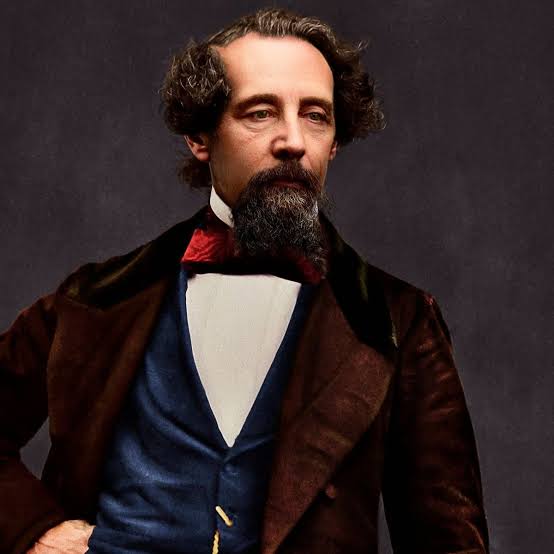
Charles John Huffam Dickens was an English novelist and social critic who created some of the world's best-known fictional characters and is regarded by many as the greatest novelist of the Victorian era. His works enjoyed unprecedented popularity during his lifetime, and by the 20th century, critics and scholars had recognized him as a literary genius. His novels and short stories are widely read today.


‘Hard Times’ is the tenth novel by Charles Dickens, first published in 1854. The book surveys English society and satirizes the social and economic conditions of the era. 'Hard Times' is unusual in several ways. It is by far the shortest of Dickens's novels, barely a quarter of the length of those written immediately before and after it. Also, unlike all but one of his other novels, Hard Times has neither a preface nor illustrations. Moreover, it is his only novel not to have scenes set in London. Instead, the story is set in the fictitious Victorian industrial town of Coketown, a generic Northern English mill town that is in some ways similar to Manchester, though smaller. Coketown may be partially based on 19th-century Preston.


Tamasha is a 2015 Indian coming-of-age romantic drama film written and directed by Imtiaz Ali and produced by Sajid Nadiadwala from his studio, Nadiadwala Grandson Entertainment. It stars Ranbir Kapoor and Deepika Padukone. The film score and soundtrack album were composed by A. R. Rahman, while lyrics for the songs were written by Irshad Kamil. Tamasha was filmed in the Indian cities of Shimla, Delhi, Gurgaon, and Kolkata, with additional filming in Tokyo and Corsica. The film tells the story of character Ved Vardhan Sahni (played by Kapoor) in three stages: as a 9-year-old child, a 19-year-old adolescent, and a 30-year-old adult in a nonlinear narrative.


Que: Comparative study of 'Hard Times' and Hindi film 'Tamasha'.

Ans.

Though both the novel and movie are written in different eras, we still find similarities in both of the works. Hard Times, published in 1854, and Tamasha, released in 2015, have similar themes like industrialism, dehumanization, imagination, and creativity. In both works, we see the struggles of characters in both novels and movies. 

First, let’s talk about similarities:

Individuality and conformity:

In both of the works, we find individuals struggling for their individuality and seeking conformity from society. In the movie, there is a character named Ved who struggles with family issues when choosing a career, and he becomes just a puppet of the mechanical job and struggles to get out.

In the same way, we find the character of Loisa, who also suffers from the same problem: she likes different things, but due to her father’s belief system and for her brother’s sake, she has to marry Mr.Bounderby, whom she does not like.

Society's Expectations:

In society, there is pressure that a person has to follow certain things just to protect their family’s so-called reputation, for which one has to struggle a lot. In the novel, we find Louisa, Cecelia, and Stephen Blackpool struggling to fulfill the needs of society. In the movie Tamasha, we find Ved wands to be a storyteller in his life, but because of his father’s choice, he has to choose his career in engineering, and he also suffers a lot.

The Impact of Art and Imagination:

In the novel, there are many references to Cecelia having the ability to imagine certain things that are out of reality, but she suffocates every time she tries to express her feelings. And Gradgrind has a belief system that only understands the language of facts.

Similar to Ved, we see from his childhood that he likes stories, and his imagination is strong enough to create new stories as well. 

Self-Discovery: 

One characteristic of the novel is that in the novel, characters grow in front of the readers, so we find a change in the behavior and belief systems of the characters. In the novel, we find that Mr.Gradgrind has always followed factual information, but in the end, he also understands the importance of heart or imagination as well. 
In the movie, we see that Ved is so delved into an industrial and monotonous life that he does not even know that he wants something else but in the end, he discovers his true self and follows his passion.

Escape from Monotony:

In the novel, there are so many references to the monotonous lives of characters, for example, the workers of the factory. In the movie, we find how Ved is stuck in his hectic and monotonous life. But in the novel, we see that a person can only escape from this type of life through better understanding. But for poor people, the escape is only as we see in Stephen’s character.

In the movie, the protagonist escapes from this life after discovering himself and gaining a better understanding of life, but we can see he belongs to a well-to-do family.

Differences:

Medium:
 
"Hard Times" is a classic 19th-century novel, while "Tamasha" is a contemporary Bollywood film. This alone leads to significant differences in style, narrative, and presentation.
 
Setting:
 
"Hard Times" is set in the industrial town of Coketown in England during the Victorian era, focusing on the harsh realities of industrialization and class struggle. In contrast, "Tamasha" primarily takes place in various scenic locations, including Corsica and India, exploring themes of self-discovery and relationships.
 
Characters:

 The characters in each work are distinct. "Hard Times" features characters like Mr. Gradgrind, Louisa, and Bounderby, who represent various aspects of Victorian society. "Tamasha" revolves around Ved and Tara, two modern individuals dealing with their own personal struggles.

In summary, "Hard Times" and "Tamasha" are distinct in terms of medium , setting, and character, but they share common ground in their exploration of human nature and the development of their central characters.